
REVIVE Project Kick-off Meeting
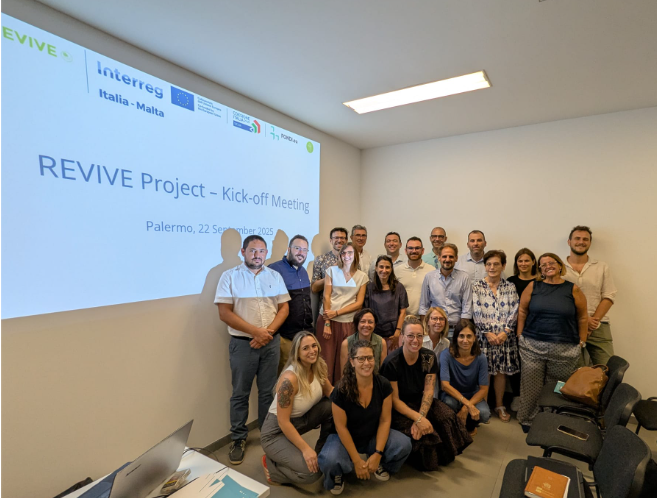
REVIVE Project Partners Meet in Palermo for the Kick-off Meeting
The kick-off meeting of the REVIVE project (REVIVing marine Ecosystems through habitat restoration measures) brought together the five project partners from Malta and Sicily to officially launch their collaboration towards the restoration and protection of marine ecosystems in the central Mediterranean.
Funded by the Interreg Italia–Malta 2021–2027 Programme, REVIVE aims to strengthen marine biodiversity and improve the condition of priority habitats through science-based restoration measures. The project focuses on three main areas: marine habitat restoration through artificial structures and substrates, the monitoring and management of invasive alien species, and the assessment of marine litter and its impacts on marine ecosystems.
The partnership brings together the Italian National Research Council (CNR-IAS), the University of Malta, the University of Palermo, the Italian Institute for Environmental Protection and Research (ISPRA) and Ambjent Malta. By combining their scientific expertise and environmental management experience, the partners will work together to develop and implement effective conservation measures across Maltese and Sicilian waters.
The kick-off meeting marked an important first step in coordinating the partners' activities and establishing a shared approach to protecting marine habitats, supporting biodiversity, and promoting healthier and more resilient Mediterranean ecosystems.
